Every business leader wants to believe their email is safe. In our experience working alongside organizations of every size, the most dangerous assumption in cybersecurity is that “we haven’t been hit yet, so we’re probably fine.” The numbers tell a devastating story. The average cost of a data breach globally reached an all-time high of $4.88 million in 2024, up 10% from 2023, when it was $4.45 million. Email is the front door through which most breaches begin. Email security issues have become the number-one threat vector for cyberattacks, with 94% of malware delivered via email and 91% of all cyberattacks beginning with phishing emails.
The financial damage isn’t limited to Fortune 500 companies. Small and mid-sized businesses face the same threats, and often fare worse, because they have fewer resources to respond. Cybercrime is set to reach $10.5 trillion in annual global losses by 2026, and small businesses face the harshest consequences: 60% fail within six months after an attack. Therefore, understanding the specific email security issues that expose your organization isn’t just an IT concern; it’s a survival strategy.
This guide breaks down the most dangerous email security issues businesses face today, explains why they work, and gives you an actionable framework for shutting them down before they cost you millions.
Key Takeaways
- Breaches are hitting record costs: The average global cost of a data breach reached $4.88 million in 2024 – a 10% year-over-year increase. If your organization hasn’t budgeted for a multi-layered email defense, you’re betting against a multi-million-dollar risk.
- BEC is the fastest-growing threat: BEC incidents accounted for 73% of cyber incidents in 2024, up from 44% in 2023; a 64% rise year-over-year. Immediately verify all wire transfer and payment-change requests through a secondary channel, not by replying to the email.
- AI is supercharging phishing attacks: A 2025 report found that 82.6% of phishing emails are generated using AI, a 53.5% increase over the previous year. Traditional “look for bad grammar” detection no longer works. Your team needs updated training and AI-powered detection tools.
- MFA stops the vast majority of account takeovers: More than 99.9% of compromised accounts do not have MFA enabled. If your organization hasn’t enabled MFA on all email accounts, do it today. It is the single highest-ROI security control available.
- Speed of detection dramatically reduces costs: Breaches with lifecycles under 200 days had an average cost of $3.87 million, while breaches lasting more than 200 days cost an average of $5.01 million. Invest in detection and response capabilities that reduce your breach lifecycle.
Quick-Start Prioritization Framework
Not every organization can fix everything at once. This table helps you identify the right starting point based on your situation, team size, and the required level of effort.
| Strategy | Best For | Effort Level | Time to Results |
|---|---|---|---|
| Enable MFA on all email accounts | All organizations | Low | Days |
| Deploy DMARC, DKIM & SPF | Organizations without email authentication | Medium | 2 – 4 weeks |
| Conduct phishing simulation & training | All organizations | Low – Medium | 30 – 90 days |
| Implement AI-powered email filtering | Mid-size to Enterprise | Medium – High | Weeks |
| Establish BEC wire-transfer verification policy | All organizations | Low | Days |
| Secure VoIP systems with encryption & SIP protection | Organizations using VoIP | Medium | Weeks |
| Establish an incident response plan | All organizations | Medium – High | 1 – 3 months |
Start here if you’re:
- A small business (under 50 employees): Enable MFA + run a phishing simulation. This can yield the fastest ROI with the lowest cost and effort.
- A mid-sized organization (50 – 500 employees): Deploy full DMARC enforcement + implement AI-filtered email gateway + establish BEC response policy.
- An enterprise (500+ employees): All of the above plus continuous monitoring, automated incident response, and zero-trust architecture.
The True Financial Anatomy of an Email-Driven Breach
Understanding why email breaches are so expensive helps you make a business case for investing in prevention. This is where many organizations get it wrong: they see security spending as a cost, not as insurance against a catastrophic loss.
The Four Cost Buckets Every Breach Creates
Damage to a business’s reputation is an often-forgotten cost of cyber incidents. A data breach can cause your customer base to lose trust in your company’s security and integrity, leading to significant revenue losses that may be even more costly than regulatory fines or legal fees. The average cost of reputational damage or lost revenue from a data breach in 2024 was $1.47 million.
The second cost bucket is operational downtime. Depending on the type of data breach or cyberattack, your systems could be down for a few minutes to a few months. The average system downtime from a ransomware attack is 24 days. According to a 2024 study, the average cost of system downtime for businesses is around $5,600 per minute. At that rate, a single day of downtime costs over $8 million. Therefore, every hour your team spends responding to a breach rather than preventing it carries a real dollar price tag.
The third bucket – detection and containment – is where investment pays off most clearly. A data breach lifecycle of under 200 days costs on average $1.39 million less than a lifecycle of over 200 days. And the fourth, often overlooked bucket: regulatory penalties. From phishing attempts to a lack of encryption, the risks associated with standard email can cost your organization far more than just data loss. They can result in reputational damage, non-compliance fines, intellectual property interception, and significant operational disruptions.
Why Email Is the Attacker’s Preferred Entry Point
Roughly 80% of data breaches begin right in an employee’s inbox. Why? Because it’s cheap, fast, and bypasses your expensive firewalls by targeting human psychology instead of system vulnerabilities. Email works as an attack vector precisely because it is built on trust. Every message your team opens triggers an implicit judgment call, and attackers are experts at engineering those moments of lapsed judgment.
Pro Tip: Calculate your own breach exposure. Multiply your daily revenue by 24 (days average ransomware downtime) and add $1.47M for reputation damage. That’s your minimum floor for what a single email-initiated breach could cost. Now compare that to what you’re spending on email security.
Phishing: Still the #1 Email Security Issue by Volume
Phishing is neither new nor going away. In fact, it’s getting dramatically more effective. Phishing and spoofing led all complaint types with 193,407 incidents reported to the FBI in 2024. What has changed is the quality and personalization of attacks. Phishing continues to be the most popular type of attack, with nearly 200,000 reports in 2024. But what’s more alarming is the surge in losses, which jumped from $18.7 million in 2023 to $70 million this year, representing a 274% increase.
Why Modern Phishing Is So Hard to Spot
97% of people cannot reliably identify a well-crafted phishing email. The psychology is brilliantly engineered. Attackers use urgency, fear, and authority to override rational decision-making. Attackers know exactly which buttons to push: urgency, fear, curiosity, and even helpfulness. That email claiming your account will be suspended unless you act right now? It’s designed to make you panic and click before you think.
AI-Powered Phishing: A New Threat Tier
Nearly 83 percent of phishing emails are AI-generated, according to KnowBe4’s 2025 Phishing Trends Threat Report. What makes AI-generated phishing so dangerous is its ability to personalize at scale. AI-generated phishing emails achieve a 78% open rate by eliminating grammatical errors and using contextual personalization that mirrors legitimate communications, with a 21% click-through rate. Compare that to the 3% engagement rate on traditional spam. Therefore, if your phishing awareness training is more than 12 months old, it is already out of date, so you must retrain your team with updated, AI-aware simulations.
Pro Tip: Run a blind phishing simulation before launching any new training campaign. KnowBe4’s free phishing test benchmarks your team’s susceptibility so you can measure real improvement over time.
Business Email Compromise: The Costliest Email Security Issue
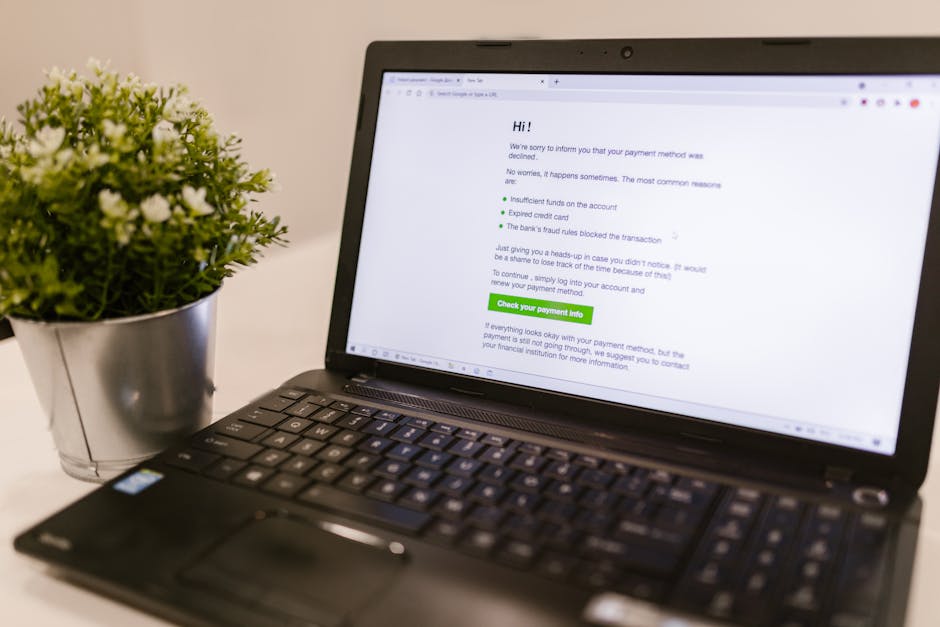
If phishing is the volume play, Business Email Compromise (BEC) is the precision strike. Business email compromise (BEC) was the second-costliest cybercrime, resulting in $2.77 billion in losses across 21,442 incidents. The average BEC incident is far more expensive than a typical phishing attack because it targets existing trust relationships.
How BEC Attacks Work
Instead of relying on malicious links or attachments, BEC attacks exploit trust by impersonating executives, vendors, or colleagues. Attackers craft convincing emails that request urgent wire transfers or sensitive information, making it difficult for security filters to detect fraud.
The rise of generative AI tools enhances this risk, particularly for Business Email Compromise. These tools allow attackers to create and execute social engineering and phishing campaigns more quickly, on a larger scale, and with greater sophistication than ever before. Pair this with deepfake technology, and the threat escalates dramatically. One high-profile case in early 2024 involved an AI-generated video of a company CFO, which was used to dupe a finance officer into authorizing a $25 million funds transfer.
The BEC-VoIP Convergence: A Rising Threat
This is where VoIP security issues and email security issues increasingly intersect, and where many organizations are caught completely off guard. Attackers no longer confine themselves to a single channel. Voice phishing (vishing) attacks increased by 442% in 2024, fueled by AI-powered deepfake technology that makes it easier to mimic real voices. These calls often trick users into revealing personal information, transferring money, or provisioning access to secure systems.
A typical combined attack works like this: the victim receives a convincing BEC email, then immediately gets a “follow-up” phone call on their VoIP system from someone impersonating the CFO or CEO. The dual-channel approach dramatically increases success rates. The global VoIP/Unified Communications (UC) market is projected to grow from over $145 billion in 2024 to over $326 billion by 2032, indicating that more businesses are transitioning to these services. With that growth comes an expanded attack surface. UC isn’t just a phone line over the internet. It’s a bundle of apps, databases, devices, and user accounts. Compared to regular phone lines, it opens the door to Denial-of-Service attacks that freeze call service.
The action this demands: Establish a strict verification policy. Any wire transfer request, regardless of how it arrives – email, VoIP call, or both – must be verified through a pre-agreed out-of-band method before execution.
Pro Tip: For VoIP security, prioritize encryption using SRTP (Secure Real-Time Transport Protocol) and ensure your SIP (Session Initiation Protocol) provider offers DoS protection. These two controls alone eliminate the most common VoIP attack vectors. Learn more from Vonage’s VoIP security guide.
Account Takeover and Credential Theft via Email
Account takeover (ATO) is the sleeper threat in email security. After stealing valid credentials, often from a third-party breach, attackers gain access to a legitimate corporate account. Once inside, they send internal phishing messages, intercept invoices, and exfiltrate data, all from a trusted, legitimate account that bypasses your filters.
The Credential Theft Pipeline
The number of infostealers delivered via phishing emails per week increased by 84% year-over-year. This indicates that phishing has emerged as a “shadow” infection vector for identity attacks. Infostealers quietly harvest login credentials and transmit them to attackers, who then either use them directly or sell them on the dark web. Infostealers steal sensitive information, like login credentials, personally identifiable information (PII), and intellectual property, from computer systems, typically resulting in regulatory fines for victim organizations.
MFA: Your Most Effective Email Security Control
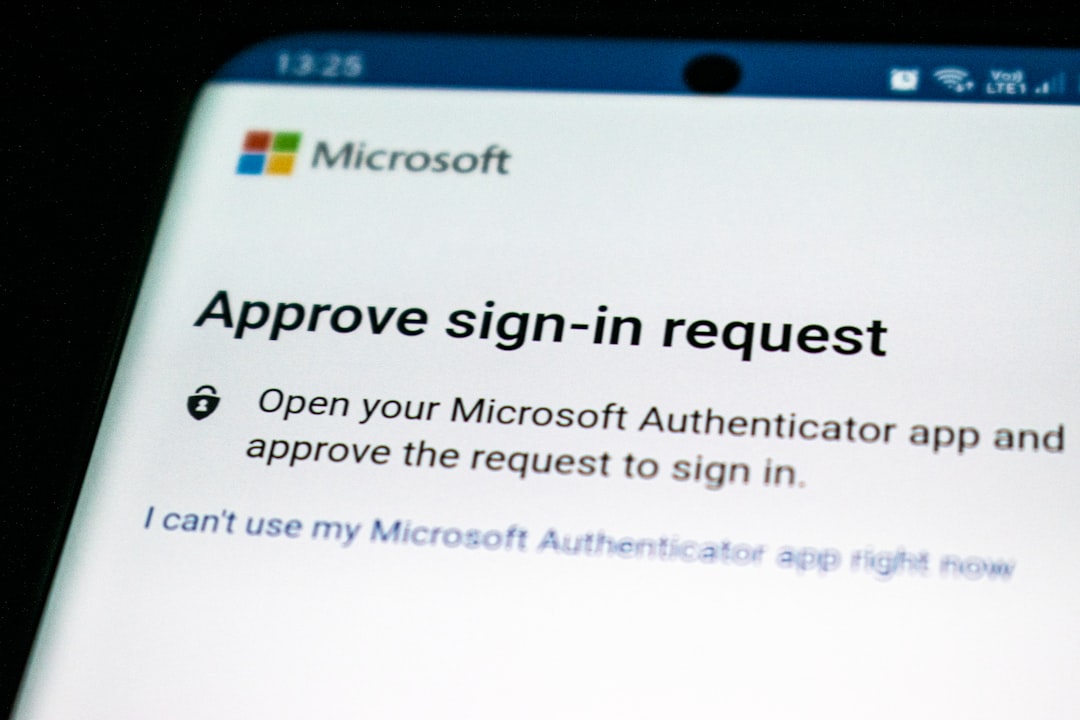
We’ve found that no single control has a better cost-to-effectiveness ratio than multi-factor authentication. Microsoft reports that its systems face more than 1,000 password attacks per second, and over 99.9% of compromised accounts lack MFA protection. Therefore, if you have employees whose email accounts don’t have MFA enabled, you have an immediate, unacceptable exposure.
According to JumpCloud, 87% of companies with over 10,000 employees use MFA, while SMBs trend toward an MFA adoption rate of around 34% or less. That gap in small business adoption explains precisely why SMBs are disproportionately targeted. If your organization is in that 66%, enabling MFA is your single highest-priority action item today.
Pro Tip: Avoid SMS-based MFA for business-critical email accounts. Opt for authenticator apps (Google Authenticator, Microsoft Authenticator) or hardware security keys (like YubiKey). CISA’s MFA guidance explains the differences and implementation steps.
Email Authentication Failures: DMARC, DKIM, and SPF Gaps
Here’s a hard truth: you can train your employees perfectly and still be impersonated. Without proper email authentication, attackers can send emails that appear to come directly from your domain, and your customers, partners, and employees will have no technical way to distinguish them from the real thing.
Why 79% of Breached Domains Were Unprotected
79% of breached domains had ineffective DMARC protection, impacting both security and deliverability. This is a staggering number. The three protocols that form the backbone of email authentication – SPF, DKIM, and DMARC – are either not deployed or deployed incorrectly in most organizations.
SPF, DKIM, and DMARC all solve a different part of the authentication puzzle: SPF checks where the email came from (sending server), DKIM checks what the email says (message integrity), and DMARC checks who sent it (sender identity in the From field) and what to do if it fails. Missing any one of them creates exploitable gaps.
The DMARC Enforcement Gap
The EasyDMARC 2026 Adoption Report shows global DMARC adoption at 52.1%, up from 27.2% in 2023, but more than half of those domains are stuck at p=none, providing zero spoofing protection. Organizations deploying DMARC at p=none are like installing a burglar alarm but leaving it in test mode. The alert fires, but nobody stops the intruder.
Countries with national DMARC mandates saw phishing success rates drop from 69% to 14%, while countries without mandates saw vulnerability rise to 97%. Therefore, moving from p=none to p=reject isn’t just a technical best practice; it’s the difference between vulnerability and protection.
Implementing DMARC the Right Way
The correct rollout path, per Cisco’s email authentication best practices:
- Start at p=none – Monitor all email traffic without blocking anything
- Fix SPF and DKIM – Ensure all authorized senders are correctly configured
- Move to p=quarantine – Suspicious mail goes to spam rather than inbox
- Graduate to p=reject – Unauthenticated emails are blocked entirely
In February 2024, Google and Yahoo introduced mandatory email authentication requirements for bulk senders (those sending more than 5,000 emails per day). The requirements include SPF and DKIM authentication on all outgoing email, a published DMARC record with at least p=none, and spam complaint rates below 0.3%. This is no longer optional; it’s a platform requirement.
Malware Delivery via Email Attachments and Links
94% of malware arrives via email attachments. Nearly all ransomware, trojans, infostealers, and remote access tools enter organizations the same way: through an employee opening an attachment or clicking a link. Phishing remains one of the most expensive initial attack vectors, averaging $4.8 million per breach. Therefore, if phishing leads to malware, you’re looking at nearly $5 million in exposure from a single attachment click.
The QR Code Phishing Surge
One of the fastest-growing email security issues is “quishing” – phishing via QR codes embedded in emails. QR-code phishing played a significant role in the 27% increase in threat detections from 2023 to 2024, underscoring the rising sophistication of email-based attacks. QR codes are effective because they bypass standard email link-scanning tools. When an employee scans a QR code with their phone, they’re often moving to a less-secure personal device outside your corporate security perimeter.
Thread Hijacking: The Trusted-Conversation Attack
Instead of sending random phishing emails, attackers hijack legitimate email threads by compromising accounts. They reply within ongoing conversations, inserting malicious attachments or links, making the phishing attempt appear more authentic and bypassing traditional filters. This technique increases the likelihood of victim engagement.
After years of analyzing incident reports, we’ve found that thread hijacking is the single hardest attack for employees to spot, because every legitimate context signal – the sender name, the email history, the project references – checks out perfectly.
Pro Tip: Configure your email gateway to scan all QR codes in inbound emails by converting them to hyperlinks and running them through your URL reputation filter. Most enterprise email security platforms (Proofpoint, Microsoft Defender for Office 365, Mimecast) support this as a configurable policy.
Human Error and Insider Risk in Email Security
Let’s be honest about something the industry often sidesteps: the most dangerous threat to your email security is already inside your organization, not because your employees are malicious, but because they’re human.
The Human Error Statistics You Need to Act On
Human error is responsible for 95% of data breaches, making it the dominant factor in security incidents. This includes accidental misdirection of sensitive information. 37% of data breaches occur because employees accidentally send sensitive information to the wrong person, including misdirected emails containing customer data, reply-all disasters that expose confidential information to dozens of unintended recipients, and attachment errors in which sensitive files go to external parties.
51% of employees have not received any training on how to avoid phishing scams. That statistic should be alarming. More than half of your workforce is navigating one of the most dangerous threat landscapes in history without formal training to recognize an attack.
The Good News: Training Works (When Done Right)
Organizations with comprehensive training programs can reduce employee susceptibility to phishing attacks by up to 86% compared to their initial baseline. That’s a transformational reduction. According to Proofpoint’s 2024 State of the Phish Report, 84% of U.S. organizations reported that after their employees underwent security awareness training, the ability to spot phishing attempts improved, and click rates on phishing emails decreased.
The critical caveat: training must be ongoing, role-specific, and scenario-based, rather than a once-a-year compliance checkbox. 71% of new hires are more likely to click on phishing links within their first 90 days of employment. New hires were 45% more likely than experienced staff to click links in phishing emails impersonating the CEO. Therefore, onboarding should include immediate phishing awareness training before employees gain access to production systems.

The 5 Costliest Email Security Mistakes Businesses Make
In our experience, most organizations that get hit weren’t ignorant of the risk. They made fixable mistakes. Here are the five that show up again and again:
Mistake 1: Using Email as the Sole Verification Channel
Confirming wire transfers, vendor payment changes, or executive requests by replying to the same email thread means you’re trusting the attacker’s channel to verify the attacker’s request. Always verify financial transactions through a separate, pre-established channel: phone call to a known number, video call, or in-person confirmation.
Mistake 2: Leaving Legacy Accounts Active
Former employees’ email accounts left active after offboarding are prime targets. Account takeover is one of the top stressors for cybersecurity leaders. Once threat actors gain access to an employee’s account, they use it to move laterally, sell credentials to other cybercriminals, and send phishing emails that are difficult for traditional security controls to detect because the threat appears to come from a trusted domain. Implement automated deprovisioning: accounts should be disabled within hours of an employee’s departure.
Mistake 3: Relying on a Single-Layer Defense
The email security market is fragmented, reactive, and reliant on outdated tools such as endpoint detection and response (EDR), which aren’t fully effective against email-based threats. A spam filter alone is not email security. A layered defense includes: email authentication (DMARC/DKIM/SPF), AI-powered threat detection, MFA, employee training, and incident response protocols.
Mistake 4: Ignoring VoIP Security Issues
Organizations that secure their email but neglect their VoIP systems create an obvious attack pathway. As businesses become more digital, any security breach can have serious consequences. From leaked data to disrupted customer interactions, poor VoIP security can cause significant harm. VoMIT attacks exploit misconfigured VoIP devices or systems to gain unauthorized access, eavesdrop on calls, or launch other attacks. These vulnerabilities often come from default or weak device configurations. Audit your VoIP configuration as rigorously as your email security stack.
Mistake 5: No Tested Incident Response Plan
58% of organizations had to cease operations following email breaches of internal information barriers. Organizations without a documented, tested incident response plan amplify the cost and duration of every breach they experience. Your plan should include immediate containment steps, communication protocols, regulatory notification timelines, and a forensic investigation process.
Pro Tip: Run a tabletop incident response exercise at least twice per year. Simulate a BEC wire transfer scenario and a ransomware delivery scenario. Test who gets called, what gets isolated, and how quickly you can detect and contain. CISA-FBI-EPA Incident Response Guide provides a free, authoritative framework.
Email Security Solutions: What to Deploy and When
The right tools depend on your organization’s size, industry, and risk profile – but certain controls are non-negotiable for every business.
Tier 1: Foundation Controls (Every Organization)
| Control | What It Does | Where to Start |
|---|---|---|
| MFA on all email accounts | Blocks 99.9% of account compromise attempts | Microsoft 365 / Google Workspace admin console |
| DMARC + DKIM + SPF | Prevents domain spoofing and impersonation | MXToolbox DMARC checker |
| Phishing simulation training | Reduces click rates by up to 86% | KnowBe4, Proofpoint, Infosec IQ |
| Email encryption (TLS) | Protects messages in transit | Built into most modern email platforms |
Tier 2: Intermediate Controls (Growing Organizations)
- AI-powered email filtering – Moves beyond signature-based detection to catch novel threats. Two out of three organizations that participated in the 2024 Cost of a Data Breach study deployed AI tools across their security operations. When deploying these tools extensively across prevention workflows, organizations incurred an average of $2.2 million less in breach costs than those not using AI tools.
- Secure email gateway (SEG) – Inspects all inbound and outbound email for threats before delivery
- Data Loss Prevention (DLP) – Prevents accidental or intentional exfiltration of sensitive data
Tier 3: Advanced Controls (Enterprise and Regulated Industries)
- Zero-trust architecture – Verifies every access request, regardless of network location
- SIEM integration – Aggregates email security events with broader security telemetry for faster detection
- Threat intelligence feeds – Enriches detection with real-time data on active campaigns
Organizations that extensively use security AI and automation identified and contained a data breach 80 days faster and saw cost savings of nearly $1.9 million compared to organizations that do not use them. The ROI on advanced controls is measurable and significant.
Frequently Asked Questions
What is the most common email security issue facing businesses today?
Email continues to be the primary conduit for cybercrime, in both frequency and financial impact. Phishing is the highest-volume threat, while Business Email Compromise (BEC) causes the most financial damage per incident. 64% of businesses report facing BEC attacks in 2024, with a typical financial loss averaging $150,000 per incident.
How does VoIP relate to email security issues?
VoIP security issues and email security issues are increasingly intertwined. Attackers commonly use a multi-channel approach: a BEC email is followed by a convincing VoIP call impersonating a company executive to pressure the victim into acting. Voice phishing (vishing) attacks increased by 442% in 2024, fueled by AI-powered deepfake technology. Organizations must secure both channels as part of a unified communications security strategy.
How much did a typical email-related breach cost in 2025?
The average cost of a data breach globally was $4.44 million in 2025, down 9% from $4.88 million in 2024. However, costs vary dramatically by industry: the healthcare industry saw an average breach cost of $7.42 million in 2025, while U.S. organizations averaged $9.36 million per breach in 2024.
Does security awareness training actually reduce email-related breaches?
Yes – when done consistently and correctly. Organizations with comprehensive training programs can reduce employee susceptibility to phishing attacks by up to 86% compared to their initial baseline. Well-designed training programs typically deliver returns of 3 to 7 times their investment, with some organizations reporting returns as high as 300%. The key is ongoing, scenario-based training, not annual compliance sessions.
What is DMARC, and why does it matter for email security?
DMARC empowers domain owners to instruct email receivers on how to handle unauthenticated emails sent from their domain. It combines the capabilities of DKIM and SPF and provides additional reporting mechanisms. With DMARC, domain owners can specify how to handle emails that fail authentication, protecting their brand reputation by reducing email fraud and phishing attacks. Without DMARC at enforcement level (p=reject), anyone can send email that appears to come from your domain.
How quickly can a business recover from an email-based breach?
Recovery time depends heavily on preparation. In 2024, it took an average of 258 total days to identify and contain a data breach, reaching a seven-year low. Organizations with incident response plans, cyber insurance, and pre-engaged forensic retainers recover significantly faster and at lower cost. It took an average of 194 days to identify a data breach globally in 2024. Organizations using threat intelligence identify threats 28 days faster on average.
What is the fastest, most effective email security improvement a small business can make today?
Enabling MFA on all email accounts is the single fastest, highest-impact improvement any organization can make. Using multi-factor authentication (MFA) can prevent more than 99.9% of account hacking attempts, according to a 2025 report. It takes less than an hour to configure in Microsoft 365 or Google Workspace and requires no budget beyond time.
The Bottom Line: Email Security Issues Are a Business Risk, Not Just an IT Problem
The $4.45 million figure in this article’s headline isn’t a worst-case scenario; it was the global average. In the United States, the average cost of a breach was nearly $9.36 million. For healthcare organizations, it exceeded $7.42 million in 2025. These aren’t abstract statistics. They represent businesses that had to explain to their customers, employees, and boards exactly what went wrong and what it cost.
What actually works is a layered approach: authentication protocols that prevent domain spoofing, AI-powered detection that catches novel threats, MFA that blocks credential theft, trained employees who recognize attacks, and a tested response plan that minimizes damage when something does get through. No single control is enough. All of them together create a posture that makes your organization a hard target rather than an easy one.
If you’re ready to assess and strengthen your organization’s email security posture, Datacate, Inc. provides the infrastructure and expertise to help businesses build resilient, secure communication environments.
Sources
- Cost of a Data Breach Report 2024 – Key Findings – Morgan Lewis. Analysis of Ponemon Institute’s 2024 global breach cost findings. https://www.morganlewis.com/blogs/sourcingatmorganlewis/2025/05/study-finds-average-cost-of-data-breaches-significantly-increased-globally-in-2024
- Cost of a Data Breach Report 2025 – Key Findings – Morgan Lewis. Analysis of Ponemon Institute’s 2025 global breach cost data. https://www.morganlewis.com/blogs/sourcingatmorganlewis/2026/04/study-finds-average-cost-of-data-breaches-decreased-globally-in-2025
- Email Attacks Drive Record Cybercrime Losses in 2024 – Proofpoint. Analysis of FBI IC3 2024 report through the lens of email security threats. https://www.proofpoint.com/us/blog/email-and-cloud-threats/email-attacks-drive-record-cybercrime-losses-2024
- 35 Email Security Threat Statistics Every Brand Must Know in 2026 – Mailmend. Comprehensive statistics on phishing, BEC, and email security threats. https://mailmend.io/blogs/email-security-threat-statistics
- Email Security Issues: Top 10 Critical Threats – Concertium. Analysis of the most critical email security threats facing businesses. https://concertium.com/email-security-issues/
- Stats from the 2024 Email Security Risk Report – Egress. Survey of 500 cybersecurity leaders on email threats and security posture. https://www.egress.com/blog/company-news/stats-from-the-email-security-risk-report
- 110+ Latest Data Breach Statistics – Secureframe. Comprehensive breach statistics and trends for 2025 – 2026. https://secureframe.com/blog/data-breach-statistics
- How Much Does a Data Breach Cost in 2024? – Embroker. Breakdown of breach cost components including reputation damage and downtime. https://www.embroker.com/blog/cost-of-a-data-breach/
- VoIP Security: Risks, Best Practices, and How VoIP Encryption Works – NetLink Voice. Guide to VoIP threats including vishing statistics. https://netlinkvoice.com/blog/voip-security-a-guide-to-risks-encryption-best-practices/
- 7 VoIP Security Risks You Need to Fix Now – RingCentral. Overview of VoIP vulnerabilities and the projected market growth. https://www.ringcentral.com/us/en/blog/voip-security-risks/
- DMARC, SPF, and DKIM in 2026: Email Authentication as Regulatory Requirement – DuoCircle. In-depth analysis of DMARC adoption gaps and regulatory requirements. https://duocircle.com/email-security/dmarc-spf-dkim-2026-email-authentication-regulatory-requirement-best-practice
- SPF, DKIM, and DMARC Made Simple – Valimail. Practical guide to deploying all three email authentication protocols. https://www.valimail.com/blog/dmarc-dkim-spf-explained/
- AI Cyber Threat Statistics: The 2025 Landscape – The Network Installers. Statistics on AI-powered cyberattacks, deepfakes, and defensive AI. https://thenetworkinstallers.com/blog/ai-cyber-threat-statistics/
- AI-Generated Phishing: The Top Enterprise Threat of 2026 – StrongestLayer. Analysis of AI-generated phishing capabilities including the 5-minute attack experiment. https://www.strongestlayer.com/blog/ai-generated-phishing-enterprise-threat
- Security Awareness Training Statistics 2025 – Brightside AI. Meta-analysis of 100+ studies on training effectiveness and ROI. https://www.brside.com/blog/security-awareness-training-statistics-2025-100-studies
- Multi-Factor Authentication Statistics – JumpCloud. 2024 IT Trends Report data on MFA adoption rates and password attack volumes. https://jumpcloud.com/blog/multi-factor-authentication-statistics
- Multi-Factor Authentication Statistics and Facts (2026) – Market.us Scoop. Global MFA adoption data and statistics on compromised accounts. https://scoop.market.us/multi-factor-authentication-statistics/
- Top Email Security Risks in 2024 – MXGuardian. Enterprise-focused analysis of email threats and best practices for defense. https://www.mxguardian.net/top-email-security-risks/